

 Previous

Jan's Working with Presentations
Basics: Interface: Views: Slide Sorter
The Slide Sorter View shows numbered thumbnails of the slides, in order going across the window. The current slide has an extra border, gold or orange, depending on the version of PowerPoint.
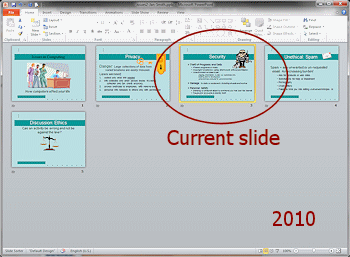
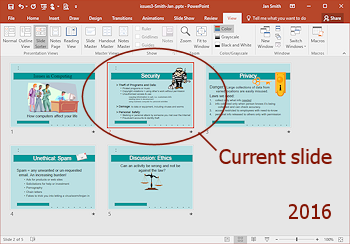
What can you do in Slide Sorter View?
- Change the order of slides by dragging the thumbnails or by using cut and paste.
- Select multiple slides at once.
- Delete a slide or a group of slides.
- Add a new slide.
- Copy and paste a slide or slides.
- Run the transition or animation effect on the slide's thumbnail.
The Slide Sorter View is the best view when you need to move, copy, or delete a lot of slides.
What can't you do in Slide Sorter View?
- Edit contents of slides.
(Use Normal view.) - Add or edit notes.
(Use Notes Page View or Notes Pane in Normal view)
 Icon for animation/transition: The icon
  below a slide thumbnail in Slide Sorter view means that the slide has a slide transition or animation. Clicking the
icon will run the effect on the thumbnail. Handy dandy!
below a slide thumbnail in Slide Sorter view means that the slide has a slide transition or animation. Clicking the
icon will run the effect on the thumbnail. Handy dandy!
 |
Step-by-Step: Slide Sorter |
|
| What you will learn: | to switch to Slide Sorter view to run animation in this view to select slides to copy slides to move slides with cut and paste to move slides by dragging to delete slides |
Start with: , issues3-Lastname-Firstname.pptx from your Class disk
Switch to Slide Sorter View
-
Click on


 the Slide Sorter
button on the Views bar.
the Slide Sorter
button on the Views bar.



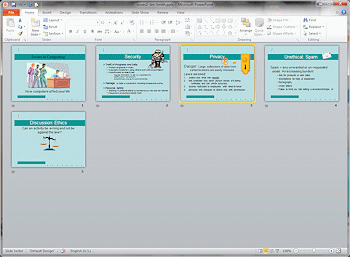 The window changes to the Slide Sorter view with
thumbnails of the slides running across the pane.
The window changes to the Slide Sorter view with
thumbnails of the slides running across the pane.Alternate method: Ribbon: View > Presentation Views > Slide Sorter
Slide Sorter View: Run Animations
A slide that has an animation effects has an animation icon below the slide thumbnail. Clicking the icon runs the animation on the slide right there in Slide Sorter view. So tiny, but so cute!
-
Still in Slide Sorter view, click on
 , the
animation icon below the Slide 1 thumbnail.
, the
animation icon below the Slide 1 thumbnail.
Any transition and animations play on the slide thumbnail without your needing to click to advance each one. When you select an transition or animation, you can choose whether or not a mouse click is needed for the effect to play.A transition brings the next slide into view. You might see only a background until the slide's animations run.
An animation brings a part of the slide into view. - Repeat for each of the other slides.
This presentation is not an example of 'best practices. It uses too many different transitions and animations. Of course a presentation might not have any transitions or animations at all.
Slide Sorter View: Select Slides
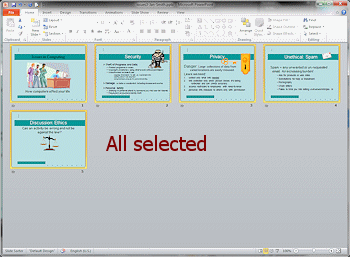
You can use the same methods to select multiple slides that you use in Windows Explorer/File Explorer to select multiple files. Slides that are selected have a thick, colored border.
Methods:
- Adjacent slides: Click the first slide. While holding SHIFT down, click the last slide. All slides in between are selected.
- Non-adjacent slides: Click the first slide. While holding CTRL down, click on each of the other slides you want to select.
-
 Select
adjacent slides:
Select
adjacent slides:
Click on the Slide #1 at the top left. Hold SHIFT key down and click on Slide #5. All slides are selected.
- Deselect slides: Click in a blank area to unselect all slides.
-
 Select
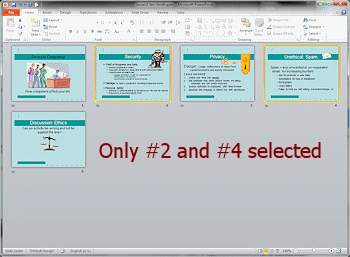
non-adjacent slides: Click on slide #2. Hold down the CTRL key and click on slide #4. Those
two slides are selected but not slide #3.
Select
non-adjacent slides: Click on slide #2. Hold down the CTRL key and click on slide #4. Those
two slides are selected but not slide #3.
- Deselect slides: Click in a blank area to deselect the slides.
Slide Sorter View: Copy Slides
You can duplicate existing slides instead of having to set the same features all over again. You will practice with duplicates of the current 5 slides. This is probably most useful when you have created a complex layout that you want to use in several slides. Turning that layout into a new Master is a better approach if you will use it on many slides.
-
 Select all of the slides
with the key combo CTRL + A.
Select all of the slides
with the key combo CTRL + A.
(This notation means to hold the CTRL key down while you press A, then release both keys.)
This method is very useful when you need to select more slides than show on the screen right now!
-
 Click
Click  the Copy button on the Home tab.
OR
Use the key combo CTRL + C.
-
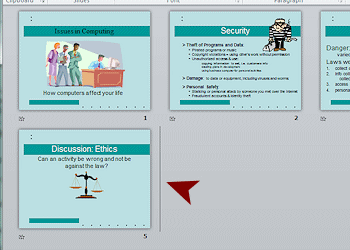 Click to the right of the last slide. A vertical bar appears,
showing where a new or pasted slide will go.
Click to the right of the last slide. A vertical bar appears,
showing where a new or pasted slide will go.
-
Paste by clicking
 the Paste
button on the Home tab.
the Paste
button on the Home tab.
OR
Use the key combo CTRL + V.Duplicates of all 5 slides appear.
 Alternate
method: Duplicate
Alternate
method: Duplicate
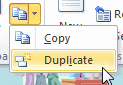
Instead of just Copy & Paste, after selecting the slides, click the arrow by the Copy button and click on Duplicate in the menu.
-
 Paste three more times.
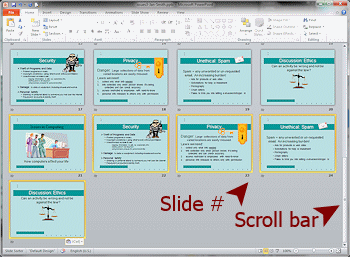
You now have 25 slides. (Check the slide numbers below the slides or the Status bar.)
This should be too many to fit in the window.
- Scroll to see all of the slides.
The length of the scroll bar gives you a clue as to how many rows are out of sight.
-
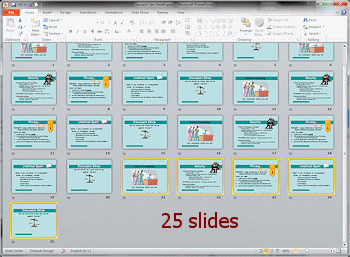 Change the Zoom on the bottom right of the PowerPoint window until you can see all 25
slides at once.
Change the Zoom on the bottom right of the PowerPoint window until you can see all 25
slides at once. Your arrangement will depend on the size of your PowerPoint window and may not look like the illustration.
Slide Sorter View: Move Slides with Cut and Paste
-
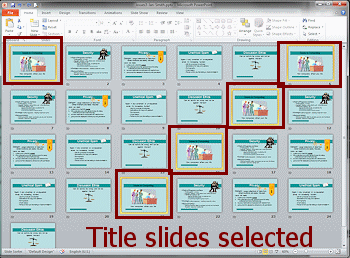 Hold the CTRL key down and click on the Title
slides, #1,6,11,16,21. (These are all of the Title
slides.)
Hold the CTRL key down and click on the Title
slides, #1,6,11,16,21. (These are all of the Title
slides.)
Scroll if necessary to see all of the slides. Be sure to that the CTRL key is pressed down when you click on a slide or you will be starting a new selection instead of adding to the selection.
- Cut the slides by clicking
 the Cut button on
the Home ribbon tab.
the Cut button on
the Home ribbon tab.
The selected slides vanish.
OR
Use the key combo CTRL + X.
-
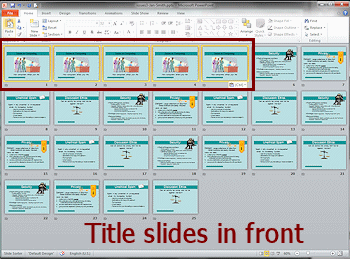 Click to the left of the new Slide #1 and paste.
All 5 Title slides appear.
-
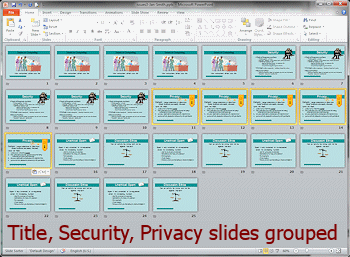 Repeat the procedure
for the Security and Privacy slides to place the duplicate slides next to
each other, keeping the original order of slides: Title, Security, Privacy
Repeat the procedure
for the Security and Privacy slides to place the duplicate slides next to
each other, keeping the original order of slides: Title, Security, Privacy
You will move the other duplicates with the drag method.
Slide Sorter: Move Slides by Dragging
You may want to reduce the Zoom so you can see better where to drop the slides as you drag.
-
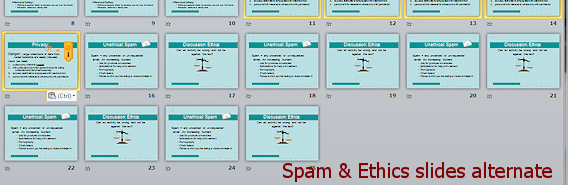 Scroll until you can see the Slide #16, the first slide Unethical: Spam.
The duplicates of Unethical: Spam and Discussion: Ethics are alternating since you moved the duplicates of the other slides.
-
 Drag Slide #18, a duplicate of Unethical: Spam,
to the left until the vertical bar or the slide thumbnail (2013, 2016) is between slides 16 and 17.
Drag Slide #18, a duplicate of Unethical: Spam,
to the left until the vertical bar or the slide thumbnail (2013, 2016) is between slides 16 and 17.
- Drop.
The slide is moved.
- Repeat for the other copies of Unethical:
Spam.
Now all the slides are grouped with their duplicates.
You did not have to do anything to the slides Discussion: Ethics. They got grouped by being left behind!
Slide Sorter View: Delete Slides
Enough is enough. It's time to get rid of all these duplicate slides. The DELETE key makes this easy!
-
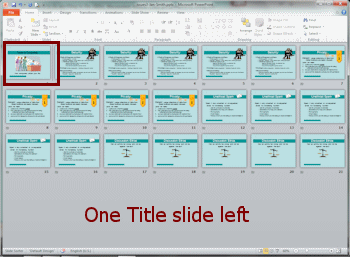 Select any
4 of the 5 title slides and press the DELETE key.
Select any
4 of the 5 title slides and press the DELETE key.
The selected slides vanish.
-
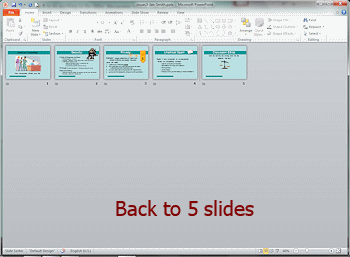 Repeat for the other duplicate slides until you are back to one
copy of each of the 5 slides.
Repeat for the other duplicate slides until you are back to one
copy of each of the 5 slides.
No need to save this time as you should be back to the original arrangement.
|
|


| © 1997-2017 Jan Smith All Rights Reserved |
Site Map What's New |
Privacy Policy Terms of Service Copyright Acknowledgements |
~~ 1 Cor. 10:31 ...whatever you do, do it all for the glory of God. ~~
Last updated: March 22, 2017